Choosing a program for your child is one of those decisions that feels bigger than it looks on paper. You are not just picking a schedule. You are picking the room your child walks into every morning, the teachers who will know their name, and the pace at which they grow into the next stage.
At our Mission Valley center on Camino Del Rio South, children move through three distinct programs between roughly age one and kindergarten: Toddlers, Preschool, and Pre-K. Below is a clear look at what happens in each room, how to tell which one fits your child right now, and what to expect when you come see it in person.
Current Openings at Mission Valley
We have immediate openings in our Toddler, Preschool, and Pre-K classrooms at Mission Valley. If you have been waiting for a spot to open, or you are moving your child from another center, this is a good time to come take a look. Start dates are available now rather than months out.
Schedule a tour at Mission Valley
Toddlers, Ages 1 to 2: Little Explorers
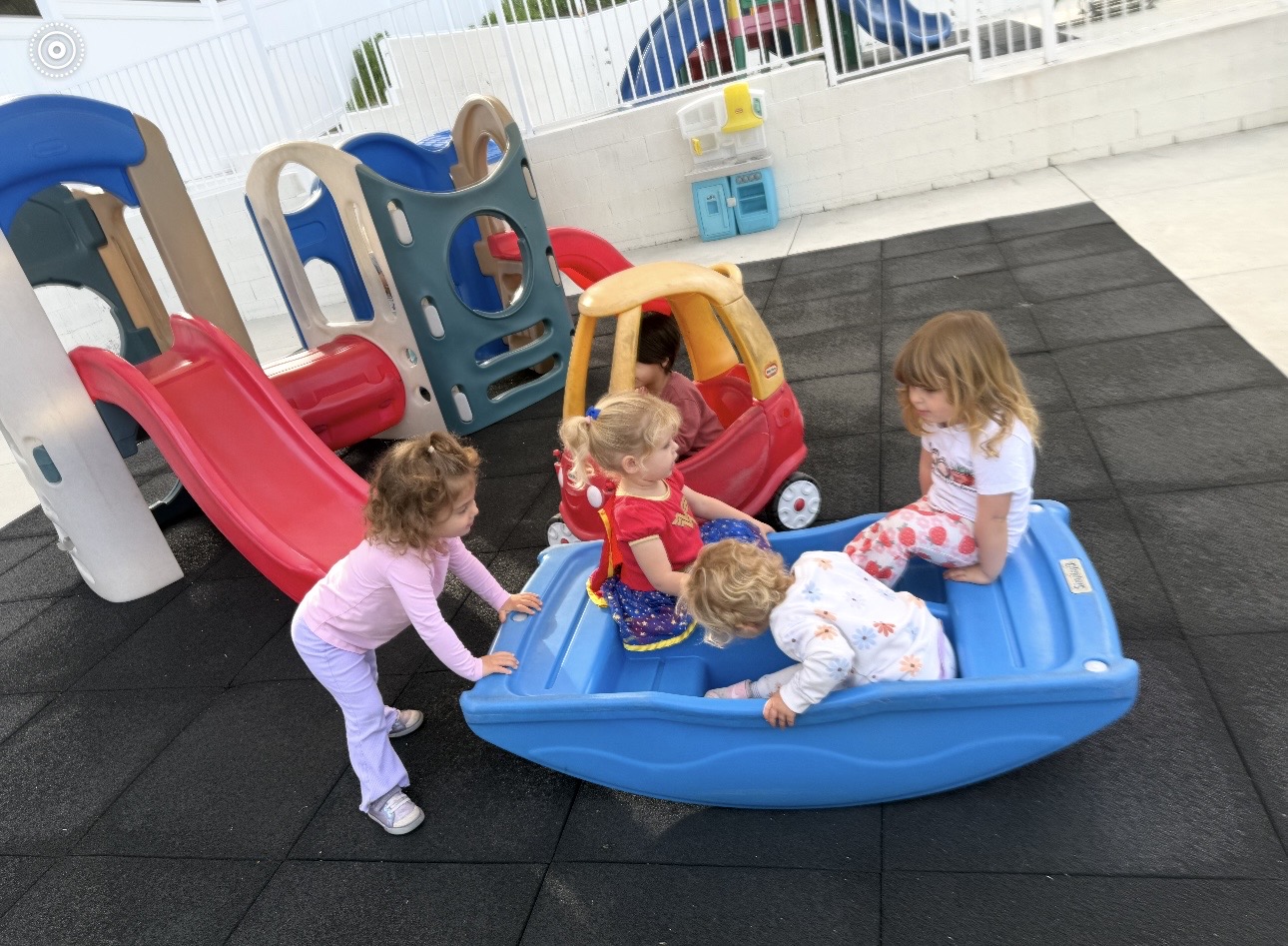
The toddler years are all about testing limits in the best possible way. Children this age are learning that they can make things happen, and our Toddler program is built to give them safe room to do that. The curriculum is play-based, so learning happens through discovery rather than instruction, while predictable daily routines give children the comfort of knowing what comes next.
In the Toddler room, your child spends the day on:
- Hands-on sensory play that sparks curiosity and builds fine motor control
- Language development through songs, stories, and steady back-and-forth conversation
- Practicing independence with feeding, handwashing, and other self-help skills
- Social-emotional learning through sharing, turn-taking, and cooperative play
- Consistent routines that build security and confidence
This is often a family’s first experience with group care, and it comes with a real adjustment period for parents as much as children. If you are getting ready for that transition, our guide on preparing your child for toddler care walks through what helps.
Preschool, Ages 3 to 4: Building Foundations
By three, most children are ready for a little more structure without losing what makes early learning enjoyable. Our Preschool program blends imaginative play with purposeful activities, so children start practicing early literacy, math, and problem solving in ways that still feel like play. Predictable routines continue here, giving children the confidence to work independently and ask for help when they need it.
A week in the Preschool room includes:
- Early literacy through stories, rhymes, and pre-writing activities
- Number sense and early math concepts introduced through games and play
- Science and nature exploration with hands-on discovery
- Social-emotional growth with an emphasis on empathy, cooperation, and teamwork
- Creative outlets in art, music, movement, and dramatic play
This is the stage where parents tend to notice the biggest visible jump. As one of our Mission Valley families put it, their three-year-old’s language, social-emotional skills, motor skills, and early academic skills all flourished during this year.
See the full Preschool program
Pre-K, Ages 4 to 5: Kindergarten Readiness
Pre-K is the bridge year. The goal is for your child to walk into kindergarten already comfortable with the rhythms of a classroom, able to follow multi-step directions, work in a small group, and advocate for themselves. We get there by pairing structured learning with plenty of room to ask questions and explore ideas.
Pre-K focuses on:
- Phonics, letter recognition, and beginning reading skills
- Writing practice, number fluency, and math readiness activities
- Small group work that encourages teamwork and early leadership
- Creative expression through art, music, and dramatic play
- Independence-building skills for a confident start to kindergarten
Not Sure Which Program Fits?
Age is the starting point, not the whole answer. Where a child lands depends on readiness, personality, and what they have already experienced in group care. A young three who has never been in a classroom may thrive with a little more time in a smaller, gentler setting. A confident four-year-old who has been in preschool for a year is often ready for the pace of Pre-K.
This is exactly what a tour is for. You will see the classrooms in use, meet the teachers who would be working with your child, and we will talk through which room makes sense based on where your child is right now. If you would rather look around first, our virtual tour gives you a feel for the space before you visit.
What Every Program Includes
Regardless of which room your child is in, a few things stay consistent across our Mission Valley center:
- Experienced lead teachers. All lead teachers hold degrees in early childhood education or a related field, with ongoing professional development.
- Consistent relationships. We prioritize staff retention so children have stable, trusted caregivers who know their personality and learning style.
- Daily communication. Families receive daily updates, monthly newsletters, parent-teacher conferences, and digital documentation of milestones.
- A secure environment. Classrooms are organized into learning centers, outdoor playgrounds are fully enclosed, and the building uses controlled access entry with regular safety inspections.
- Enrichment activities. Music, movement, and hands-on experiences are woven through the week. You can see more on our enrichment activities page.
Mission Valley is open Monday through Friday, 7:30 a.m. to 5:30 p.m.
Two Ways to Make Tuition More Manageable
Quality care is a real line item in a family budget, and we would rather be upfront about the ways families reduce it.
Referral Program
When you refer a family who enrolls, you both receive one free week of tuition, worth up to $495 each and up to $990 in combined savings. There is no limit on how many families you can refer. Credits are applied once the new family has been enrolled for 90 days, and the family you refer just needs to mention your name when they schedule their tour. Full details are on our Referral Program page.
Subsidy and Benefit Programs
We accept several childcare subsidy and benefit programs, including YMCA childcare assistance, MCCYN for military families, and subsidies administered through Child Development Associates. If you already participate in one of these, or think you may qualify, our team will help you work through eligibility and coordinate directly with the program administrator. Start with our Subsidy and Benefit Programs page.
Come See the Classrooms
The fastest way to know whether a center is right for your family is to stand in it during the middle of a normal day. Tours take about 30 minutes, and you are welcome to bring your child.
Nese Kids Care Mission Valley
967 Camino Del Rio S
San Diego, CA 92108
(619) 295-5500
Monday through Friday, 7:30 a.m. to 5:30 p.m.
Schedule a tour or call us and we will find a time that works around your schedule. If you are ready to move forward, you can also review our enrollment process.
Common Questions
What ages do your Mission Valley programs serve?
Our Mission Valley center serves children from six weeks through age five. The Toddler program covers ages one to two, Preschool covers ages three to four, and Pre-K covers ages four to five. We also offer infant care for children six weeks to twelve months.
How quickly can my child start?
We currently have immediate openings in the Toddler, Preschool, and Pre-K classrooms at Mission Valley. Once you have toured and completed enrollment, we work with you on a start date that fits your family.
Do you accept childcare subsidies?
Yes. We accept YMCA childcare assistance, MCCYN for military families, and subsidies administered through Child Development Associates. Our administrative team coordinates with program administrators on billing and documentation.
What happens on a tour?
You will see the classrooms while they are in session, meet teachers, and talk through which program fits your child. It usually takes about 30 minutes, and there is no pressure to decide anything that day.
How will I know how my child’s day went?
Teachers provide daily updates and digital documentation of activities and milestones, along with monthly newsletters and parent-teacher conferences through the year.